
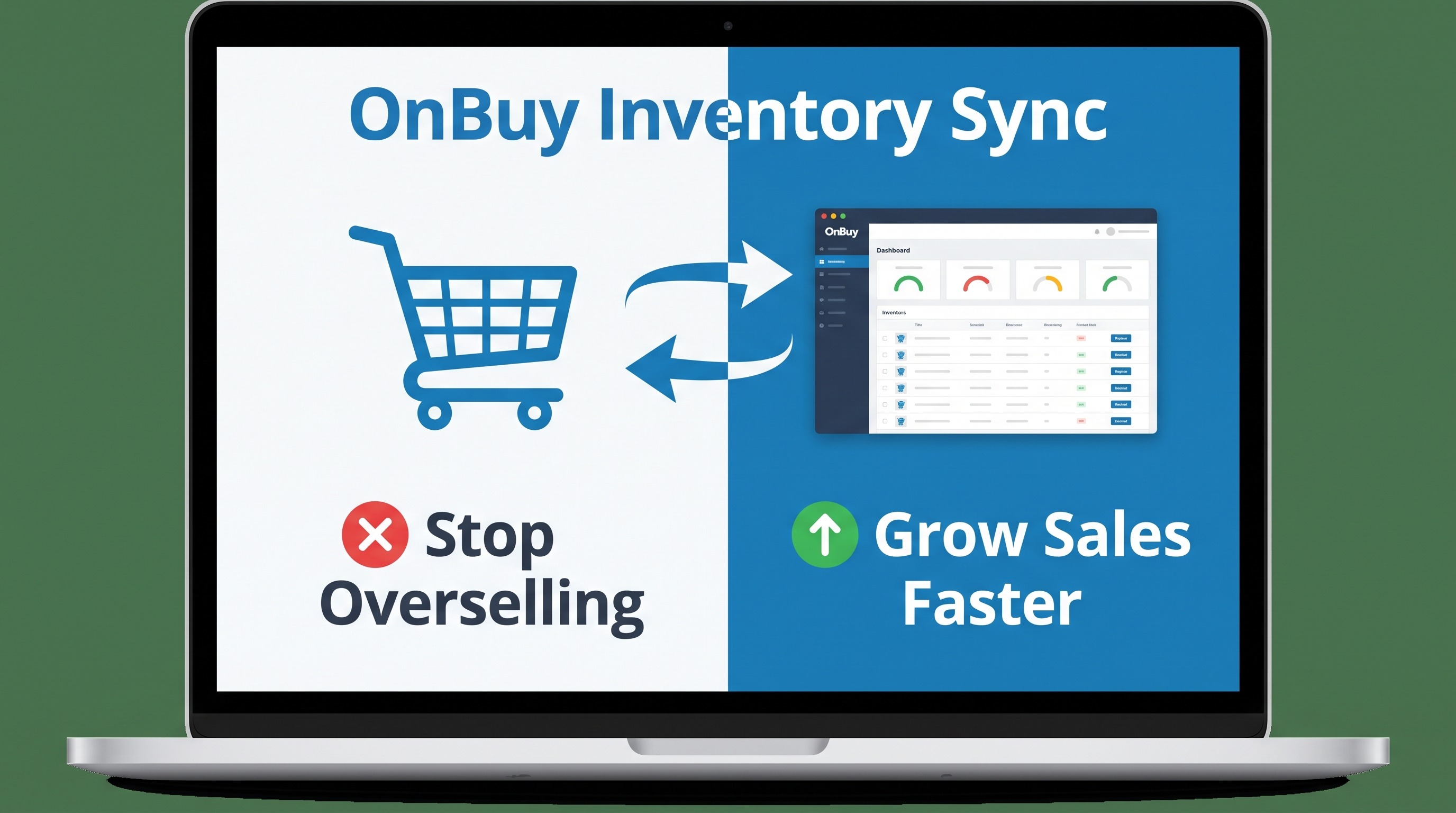
OnBuy Inventory Sync: How to Stop Overselling and Grow Sales Faster
OnBuy Inventory Sync: How to Stop Overselling and Grow Sales Faster
There’s a specific kind of frustration that comes with cancelling an order because you sold something you didn’t actually have. It happens to almost every dropshipper at some point — a supplier runs out of stock, nobody updates the OnBuy listing in time, and a customer who was excited about their purchase gets a cancellation email instead. One or two of these are forgivable. A pattern of them starts showing up in your seller metrics, and that’s a much harder problem to recover from.
Inventory sync exists to solve exactly this. This article looks at why it matters more than most sellers initially realize, and how tools like GetMyTracks make it manageable even as your OnBuy catalog grows.
Why Overselling Happens in the First Place
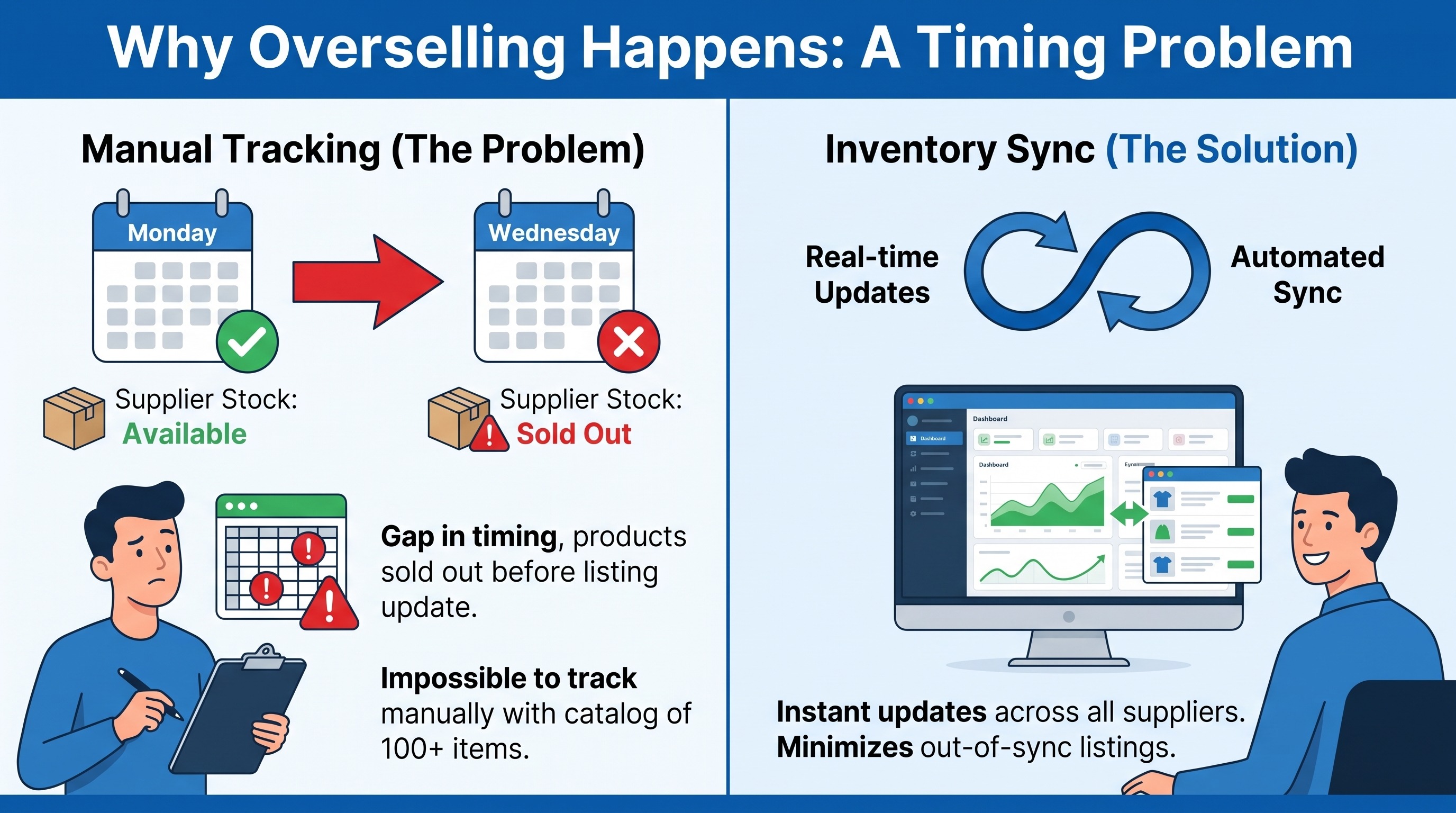
Overselling isn’t usually a sign of a careless seller — it’s almost always a timing problem. You check your supplier’s stock on Monday, list accordingly, and by Wednesday they’ve sold out of an item you’re still showing as available. Multiply that across a catalog of a hundred or more products, all sourced from different suppliers with their own stock fluctuations, and it becomes almost impossible to track manually without something falling through the cracks.
The more products you list and the more suppliers you work with, the higher the odds that at least one listing is out of sync at any given moment. It’s not a matter of if this happens with manual tracking — it’s a matter of how often.
What Real-Time Inventory Sync Actually Does
Automated inventory sync solves the timing problem directly by checking supplier stock levels on a regular schedule and updating your OnBuy listings to match — without you having to log in and check manually. If a product goes out of stock at the supplier, your OnBuy listing reflects that before a customer can place an order you can’t fulfill.
GetMyTracks handles this as part of its core functionality, keeping stock levels synchronized across your OnBuy store so the gap between “what’s actually available” and “what your listing says” stays as close to zero as possible. For a seller running dozens or hundreds of SKUs, that’s not a minor convenience — it’s often the difference between a seller account in good standing and one dealing with cancellation penalties.
The Real Cost of Getting This Wrong
It’s worth being specific about what overselling actually costs beyond the obvious refund. OnBuy, like most marketplaces, tracks seller performance metrics, and a high cancellation rate can affect your visibility in search results and your standing on the platform. A customer who gets a cancellation is also less likely to order from your store again, which means the cost isn’t just the one lost sale — it’s the lifetime value of a customer who won’t be back.
There’s also the time cost of handling cancellations manually: writing the apology message, processing the refund, and dealing with any negative feedback that follows. All of that adds up to far more lost time than simply keeping inventory synced in the first place would have taken.
Beyond Stock: Syncing Prices Too
Inventory isn’t the only thing that shifts without warning — supplier prices change regularly too, and if your OnBuy pricing doesn’t keep pace, you either eat a smaller margin than planned or end up overpriced compared to competitors who did update. Automated syncing through GetMyTracks covers pricing changes alongside stock levels, so a supplier price increase doesn’t quietly turn a profitable product into a break-even one without you noticing.
This matters especially for sellers working with dropshipping suppliers who adjust pricing frequently based on their own supply chain. Catching that manually across a large catalog just isn’t realistic on a consistent basis.
How This Supports Sales Growth, Not Just Damage Control
It’s easy to think of inventory sync purely as a defensive tool — something that prevents problems rather than creates growth. But there’s a growth angle too: sellers who trust their inventory data are more willing to expand their catalog aggressively, because they’re not worried about the operational mess that used to come with scaling up.
Once inventory management stops being a manual bottleneck, sellers tend to list more products, test more categories, and respond faster to what’s actually selling — because the administrative overhead that used to hold them back has been automated away. That shift, more than any single feature, is usually what separates OnBuy sellers who stay small from the ones who scale into a real business.
Building a More Reliable OnBuy Store
If cancelled orders or stock mismatches have been a recurring headache, the fix usually isn’t more careful manual checking — it’s removing the manual step entirely. Automated inventory and pricing sync through **GetMyTracks** handles the part of the job that doesn’t need a human judgment call, which frees you up to focus on sourcing better products and improving the listings that actually drive sales.
A store that reliably has what it says it has builds trust faster, both with OnBuy’s own performance metrics and with customers who come back because their last order arrived without a hitch. That reliability, more than any single marketing tactic, tends to be what compounds into steady, long-term growth on the platform.